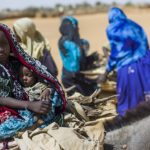
Many countries experiencing humanitarian crises, including civil conflict, recurring natural disasters, or both, also have severe newborn and maternal mortality. For countries already burdened with poor maternal and newborn health outcomes, emergencies exacerbate existing challenges.
Population movements, insecurity, increased burden on health systems, poor or damaged infrastructure and limited availability of qualified health workers can restrict access to quality care. Recent analyses have indicated that roughly 60% of maternal deaths and 45% of newborn deaths occur in countries affected by a humanitarian crisis or fragile conditions. The highest rates of stillbirth occur in conflict and emergency settings. Further studies and efforts to improve measurements are encouraged in order to better track progress and increase accountability.
29m
babies were born into conflict-affected areas in 2018
500
number of women and girls who die from complications due to pregnancy and childbirth every day in countries facing humanitarian and fragile contexts
40
percentage of refugees who are children
under the age of 18
45
percentage of newborn deaths occurring in countries affected by humanitarian crises and fragility
All data on this page represents the most recent data available, unless otherwise noted. Please visit our Newborn Numbers page and download the Excel spreadsheet to explore the data further.
Newborn Health in Humanitarian Settings Field Guide
English | Français | Español | Web portal (2022)*
*The web portal brings together essential guidance and tools that healthcare providers will find useful in designing, managing, monitoring, and evaluating newborn health services within humanitarian settings.
Manual: Newborn Care Supply Kits for Humanitarian Settings
Global Commitments
A Declaration to Accelerate Newborn Health in Humanitarian Settings (2019)
Roadmap to Accelerate Progress for Every Newborn in Humanitarian Settings 2020-2024
Surviving Day One: Caring for Mothers and Newborns in Humanitarian Emergencies on the Day of Childbirth
More on Newborn Health in Emergencies
It is no coincidence that countries affected by humanitarian crises and conflict are the riskiest for mothers and babies. Access to essential services before, during, and after pregnancy in these settings is severely restricted. As the number of people affected by conflict, natural disasters, and other emergencies increases, the gap between needs and resources is growing. There is a growing demand from responders and governments to provide for the most vulnerable groups. When a baby is born in an emergency setting, the number of risks that are encountered in the first days of life may seem insurmountable — but even in these precarious situations, many of the deaths that occur around the time of birth are preventable. We can do something to help.
The global health cluster that is led by the World Health Organization has agreed on and recently revised the Minimum Initial Service Package for reproductive health in crisis situations. The Inter-Agency Field Manual and MISP reference sheet are also available. Recognizing the gap for newborns, an inter-agency group of stakeholders and UN agencies developed additional evidence and guidelines, and coordinate advocacy for newborn health in humanitarian emergencies. They aim to galvanize efforts to ensure that life-saving care is available even in the most difficult of circumstances.
Additional Resources
- Newborn Health in Humanitarian Settings: Implementation Toolkit
- Newborn Health Resources: Trainings and Tools for Improving Newborn Health in Humanitarian Settings
- Neonatal survival in complex humanitarian emergencies: setting an evidence-based research agenda
- Neonatal survival interventions in humanitarian emergencies: a survey of current practices and programs