
Addressing Critical Knowledge Gaps in Newborn Health

Blog

By Rajiv Tandon on May 22, 2013
India
Asia

The numbers are truly alarming.

In 2011, 309,300 babies in India died on the day they were born, with the vast majority dying from preventable causes. India accounts for nearly one third of all first day deaths worldwide.
This is one of the major findings of Save the Children’s new State of World’s Mothers report, Surviving the First Day, which was released in India 7th May 2013.

The report includes the first-ever Birth Day Risk Index, comparing first-day death rates in 186 countries, as well as Save the Children’s annual Mothers Index, highlighting the best and toughest places to be a mother among 176 countries.

The 14th edition of the annual report states that each year worldwide more than 1 million babies die on the day they are born, with 29 percent of these deaths taking place in India.
The launch of the report received extensive national and international media coverage in print, TV and digital media which encouraged important policy action within India.

Two prominent daily newspapers, including the Times of India, covered the report’s launch on their front pages, and other newspapers printed exclusive stories and editorials. On television, the report was highlighted throughout the day and included an hour-long discussion with prominent journalists and parliamentarians.

In addition, several reporters accompanied Save the Children staff to see newborn and maternal programs first hand and talk with new mothers about their pregnancies, childbirth and post natal experiences.

Prior to the release of the report, Carolyn Miles, CEO & President of Save the Children US, visited India and met with the mothers, doctors and nurses at the Safdurjang government hospital in New Delhi. She later met with the Secretary and Joint Secretary, Ministry of Health and Family Welfare, Government of India, to discuss the findings in the State of the World’s Mothers report and its recommendations regarding major newborn-related policy changes.

The Joint Secretary noted that on April 18 the Union Cabinet approved the National Policy for Children, which will help guide implementation of health and nutrition, education and protection programs for children. He said the government was preparing to announce a number of additional policy decisions focused on saving newborn lives. They include:

  • Allowing Auxiliary Midwife Nurses (ANM) to provide Injection Gentamycin, an antibiotic, to a neonate suffering from sepsis (a systemic bacterial infection).
  • Providing pre-referral antenatal cortico steroids to ANMs for cases of preterm labour in states with well-developed health systems and in all other facilities
  • Approving implementation of Kangaroo Mother Care (encouraging skin-to-skin contact among new mothers and their babies) in health facilities

Until now, use of Gentamycin by ANMs has been stalled by Indian government officials for over 35 years.

Key advocacy moments between political leaders and NGOs, like the ones described above, can play a pivotal role in policy changes that are critical to achieving better outcomes for newborns. The State of the World’s Mothers report is providing a platform from which Indian policy makers can make decisions that can have a lasting impact for children.

Photo Credit: Andy Hall/ Save the Children


By Abeba Bekele on May 22, 2013
Ethiopia
Africa

Aregash Wacham lives in Ethiopia's district of Teferi-Kela in Southern Nations, Nationalities, and Peoples Region (SNNPR). When her daughter, Amarech, was almost four weeks old she developed a bad cough and fever.

Elfnesh Argata, one of the two Health Extension Workers (HEWs) at the health post, visited Aregash‟s home and examined the baby. Based on the chart booklet she uses to assess and classify newborn illnesses, Elfnesh determined that Amarech was severely ill with severe bacterial infection and should be referred to the health center. However, Aregash was not ready to go to the health center as she had no money to pay for treatment at the health center’.

As an HEW working in one of the intervention health posts for the Community-based Initiatives for Newborns in Ethiopia (COMBINE), where she had the opportunity to be trained and authorized to treat severe bacterial infection in neonates, Elfnesh was able to offer Amarech treatment at the health post, which has the benefit of being both closer to home and free of charge.

After receiving daily injections of Gentamycin and three doses of amoxicillin syrup per day over the course of seven days, Amarech‟s cough and fever resolved with-out complication. Aregash expressed her relief and appreciation saying, “I am very happy because my child was cured”.

Although this was her first experience taking a child to the health post for curative services, Aregash is confident in the ability of HEWs to provide quality care for newborns and infants. She explains that her community shares this trust as well: “Because of the improvements of the sick young infants and children, both I and the community are happy and interested [in seeking treatment]”. One of the greatest benefits, according to Aregash, is the affordability and availability of treatment: “Many community members don’t have the money or access to take our children to the health center. This health post is very preferable. We prefer to take our children to get treated at the health post”.

Mothers like Aregash are now aware of availability of services for newborns at the health post level in the COMBINE intervention areas. In addition to awareness raising activities conducted by HEWs and female Community Health Promoters (fCHPs) and through the Health Development Army (HDA) network, interim results and anecdotal evidence suggest the successful treatment of neonates has contributed to increased confidence in services and improved care-seeking behaviors in the community. A four month end-line census-based survey is now underway in COMBINE intervention and control communities in SNNP and Oromia, and will measure knowledge, practice, and coverage of key MNH indicators, as well as neonatal mortality compared to baseline.

The COMBINE trial, funded by the Bill and Melinda Gates Foundation and implemented through Save the Children’s Saving Newborn Lives (SNL) Program, works with the Health Extension Program (HEP) to support HEWs and fCHPs & HDA network leaders to actively identify pregnancies and deliveries and provide pre and postnatal visits focusing on birth preparation, clean delivery, essential newborn care, danger signs, and identification and referral of sick neonates, with the intervention arm of the trial providing community level treatment of neonatal infections by HEWs. COMBINE began in 2008 and is scheduled to conclude in mid-2013. In an effort to reduce neonatal mortality, which is not declining at the pace or degree of child mortality, the Federal Ministry of Health is actively planning to scale-up pregnancy and PNC home visits and community-based treatment of sepsis based on COMBINE learning.

To learn more about Infections, visit the Infections Topics Page,

By Ian Hurley on May 21, 2013
Uganda
Africa


Photo: Ian P. Hurley/Save the Children 

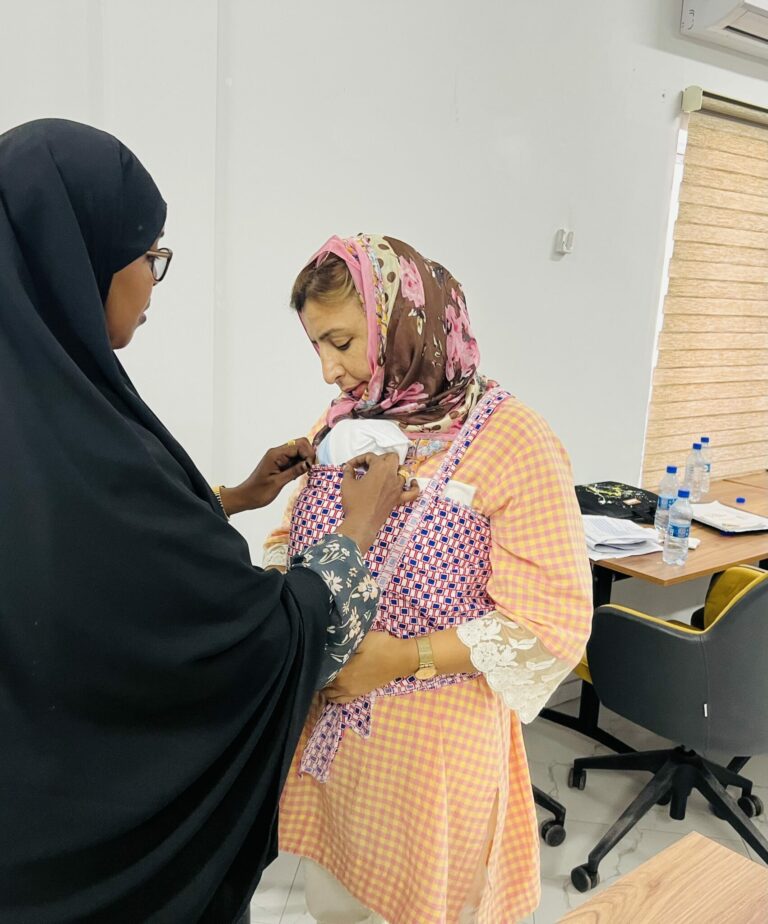
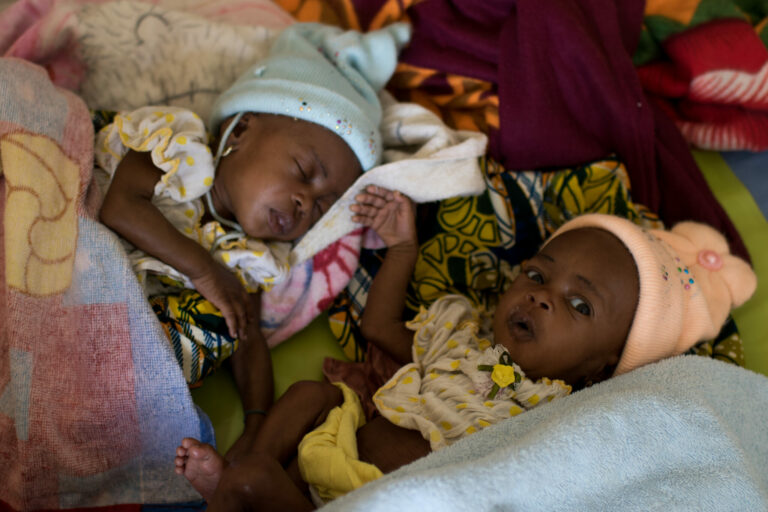
New mother Nakintu Prossy gets help wrapping her two-day-old preterm baby boy for Kangaroo Mother Care (KMC) from Kiwoko Hospital nurse Teddy Asaba Rusoke at the hospital in Nakaseke district, Central Uganda. Nakintu gave birth to twins, one boy and one girl, six weeks early. The baby girl was in an incubator at the time of this photograph. Nakintu heard about Kangaroo Mother Care during her antenatal care sessions and said she will be an advocate for KMC with her family and friends. She knows that it will provide her babies with normal brain growth and will allow for bonding between her and her babies.

This past Wednesday, May 15th, marked International Kangaroo Care Awareness Day. Some of you might be asking, does this have something to do with those cute animals that live in Australia? The good news is that you would be partially correct. Kangaroo Mother Care (KMC), which is a form of skin-to-skin contact where a newborn is wrapped to to the chest, provides babies with needed warmth, access for breastfeeding and protection from infection, much in the same way a kangaroo cares for its baby in the pouch. The modern-day concept was pioneered by the Fundación Canguro of Colombia in 1978 and its use has grown steadily across the world. KMC is an especially important intervention for babies that are born premature

Research from the Born Too Soon report highlights the benefits of KMC as part of an essential newborn care package. It is estimated that over 400,000 newborns could be saved every year if KMC was brought to scale in countries facing high preterm birth rates. Additionally, KMC has been shown to reduce respiratory problems for newborns and provide for improved weight gain, length and head circumference. These are all important to ensure that newborns survive the first 28 days and life and thrive as infants and children.   

As Save the Children's flagship newborn health program Saving Newborn Lives aims to scale-up essential newborn care interventions like KMC to targeted countries in Africa and Asia, we have an incredible opportunity to reduce newborn mortality with this simple and cheap practice. Advocacy events like International Kangaroo Awareness Day play an important role in raising awareness and spreading knowledge of these tools. 

To learn more take a look at these resources:

  • Read more about how Kangaroo Mother Care can help premature and low birth weight babies
  • Watch a video about how Kangaroo Mother Care helped save Tuntufye's life 
By Patrick Aliganyira on May 14, 2013


Photo: Ian P. Hurley/Save the Children

Long-time Village Health Team (VHT) member Zeffa Sowobi, right, begins filling out a family maternal/newborn card for expectant mother Justina at her home in Nabitovu village outside Iganga, Uganda. Zeffa was there to counsel Justina about the how to prepare for giving birth and how to make arrangements to have the baby at a health facility under the care of nurses and midwives. This will be Justina's third child. Zeffa will visit the home one more time, for a total of three antenatal home visits.

It is hard to believe that despite the tremendous progress that has been made on newborn survival over the past decades, the world had never been brought together to review, learn, share lessons and build a common understanding for the future of newborn survival, addressing this previously neglected public health issue in the context of the continuum of care and other determinants of health.

The first-ever global newborn health conference was held from April 15-18 in Johannesburg, South Africa. The conference, themed “Accelerate the Scale-Up of Maternal and Newborn Health Interventions to Reduce Mortality”, had participants from multiple backgrounds.

From over 40 sessions and countless of interactions with country teams, one couldn’t help but feel inspired. In her presentation, Professor Joy Lawn identified the big 5 causes of deaths to target if we are to reduce the deaths of children and women. These are;

  1. Childbirth complications e.g. haemorrhage, obstructed labour (causing the lives of ~2.12 million);
  2. Preterm birth complications ~1.1 million;
  3. Infections e.g. Mother - HIV, syphilis, malaria, maternal sepsis; Baby - sepsis, pneumonia, diarhoea, tetanus ~1.12 million;
  4. Maternal chronic conditions (NCDs) e.g. hypertension, diabetes (linked to preterm and to small for gestation a;
  5. Nutrition (under-nutrition and obesity). The light of this comes at the time when we have evidence-based solutions.

At the conference, interventions known to have the greatest opportunity to save most babies from preventable deaths were discussed and these are; Kangaroo Mother Care, antenatal corticosteroids, antibiotics for neonatal sepsis, clean cord care and neonatal resuscitation. These have now been simplified and, if integrated into systems, in view of the Reproductive, Maternal, Newborn and Child Health (RMNCH) continuum of care and effectively delivered at scale, can save over one million lives of newborn babies each year. Care for mothers and babies is inextricably linked and especially at the time of birth – the most opportune moment for investing efforts for maximum impact. The strongest link is between mother and newborn, also when it comes to delivering care.

"Proper care at birth saves the lives of a mother, a baby and prevents stillbirths, hence providing a triple return on investment", Professor Joy Lawn, MARCH, London School of Hygiene and Tropical Medicine

The ability to link in with other programmes will advance efforts to save newborn lives and accelerate progress towards reaching scale. Both policy and programmatic integration of high impact newborn interventions with HIV programs (PMTCT), Malaria control programs and family planning can tremendously drive scale-up of interventions. Presentations at the conference addressed the interconnectedness of looking at the full spectrum to help turn the tide in newborn health. Countries have been advised to explore and seize such opportunities as means of maximising resources, political will and opportunities for improving maternal and newborn care.

You cannot underestimate the power of the private sector and professional associations to drive change for mothers and newborn in the world. Innovations like the Helping Babies Breathe (HBB) program from the Laerdal Foundation and the American Academy of Pediatrics is one such an effort to count on and more, especially collaborations in the areas of innovations, are needed. In fact, there were demonstrations of how the HBB intervention works for those attending the conference to learn more firsthand.

Sustainable impact through the pursuit for effective coverage at scale – I am here defining “effective coverage” of maternal and newborn interventions as being able to reach all mothers and newborns in need with adequate, quality high-impact interventions.

Are we there yet? It is one thing to reach mothers and their newborns with interventions, and another to have significant impact on reducing deaths and disability. Increasing intervention coverage is important, but will result in mortality reduction only if interventions are delivered at adequate quality levels. Panelists at the conference also stressed that quality of care is thus yet another dimension calling our attention in this quest.

Overall, many developing and high burden countries have seen significant increase in facility births over the past decade; a similar trend has been seen with consistently high rate of 1st ANC visit.

However, this increase has not translated into commensurate reductions in maternal and newborns deaths!

The birth day is the riskiest day for both mother and baby. The time of birth is the most opportune moment we have to save the most of babies and mothers yet it is when we still lose them most! Even when mothers present to us in health facilities and entrust us their lives and those of their babies, we are unable to save an unacceptably high number. The package of care is defined, simplified and even increasingly clearer now than before;. Now we know that there are huge quality gaps at the time and these at the same time present to us as opportunities to seize – what took us so long? The time to reach effective coverage is now – coverage that delivers the promise.  

Taking it home - Through the country action planning support sessions at the conference, countries that participated were further enabled to make the difference that is desperately needed. The groundwork was laid towards informing national priority setting by setting ambitious, realistic and achievable targets for newborn health. Overall the conference enabled tremendous sharing of rich and invaluable experiences and learning.  

There emerged ideas and key messages to work with as we work to accelerate progress towards reaching effective maternal and newborn interventions at scale. This includes policy and agenda setting, data for decision making (including research and evidence), innovation and the role of private sector, systems and implementation were all adequately covered.

Personally, I was left with the understanding of the critical implications of the following as key for taking high impact newborn interventions to scale and accelerating the reduction of maternal and newborn deaths;

  • Targeting the biggest causes of deaths with known, high-impact interventions
  • Focus on the RMNCH continuum of care and other policy and program integration that maximises the number of women and newborns reached
  • Mobilising the global and national action for accelerated reduction of newborn deaths (in context of RMNCH) and the opportune timing of the Global Newborn Action Plan
  • The importance of country-led actions and planning for accelerated change
  • The power of multi-sectorial partnerships
  • It is the simple things that can avert most newborn deaths

Follow Patrick Aliganyira on Twitter - @aliganyira 

By Arefin Islam on May 10, 2013
Bangladesh
Asia

The newborn period is probably a complicated time for a baby and its parents. Lack of knowledge in caring for newborns properly may be an important factor behind the largest share of child death in Bangladesh by newborns, which is during the first 28 days of life.

Newborn care is essential in helping to prevent many causes of newborn deaths. Particular focus needs to be given to accessing quality emergency care for sick newborns, care for low birth weight babies and essential newborn care for all newborns so that they don’t fall sick and if they do, the right treatment can be provided.

The WHO estimates that approximately one to five percent of babies will require resuscitation at birth and many of them may die or suffer long-term disabilities if not resuscitated in the first minute of life (the Golden Minute). In Bangladesh, 10% of the babies born suffer from breathing difficulties or birth asphyxia, which can be addressed using a simple bag-mask resuscitation technique. Often oxygen and other complex techniques aren’t necessary to save most of these newborns.

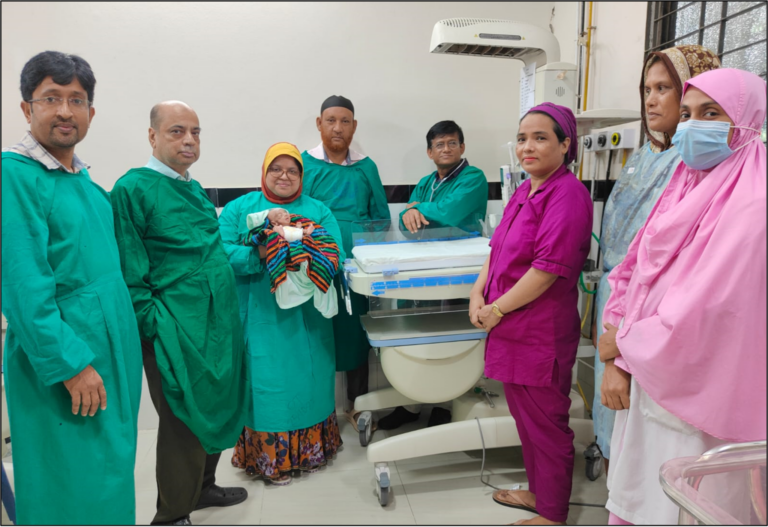
Save the Children in Bangladesh has been rolling out the Helping Babies Breathe (HBB) training curriculum specially to address this newborn complication since August 2011. Currently, 15,594 health workers  from public, private and NGOs have completed traninig. A total of 30000 caregivers across country are set to be trained. Additionally, this training has also been incorporated in pre-service and in-service curriculums.